AI summarized the main points
AI-generated summary. Please refer to the full article for precise details.
The 2026 WEC season had been disrupted before it even started. The championship was originally scheduled to open in Qatar in March, but the outbreak of war between the United States and Iran forced the calendar to change. The season instead began at Imola in Italy, which had originally been scheduled as Round 2. Officials initially hoped the situation in the Middle East would stabilize, moving Qatar to a date just before the Bahrain finale. It never happened. With both Qatar and Bahrain no longer viable, Barcelona and Monza were brought in as replacement rounds.
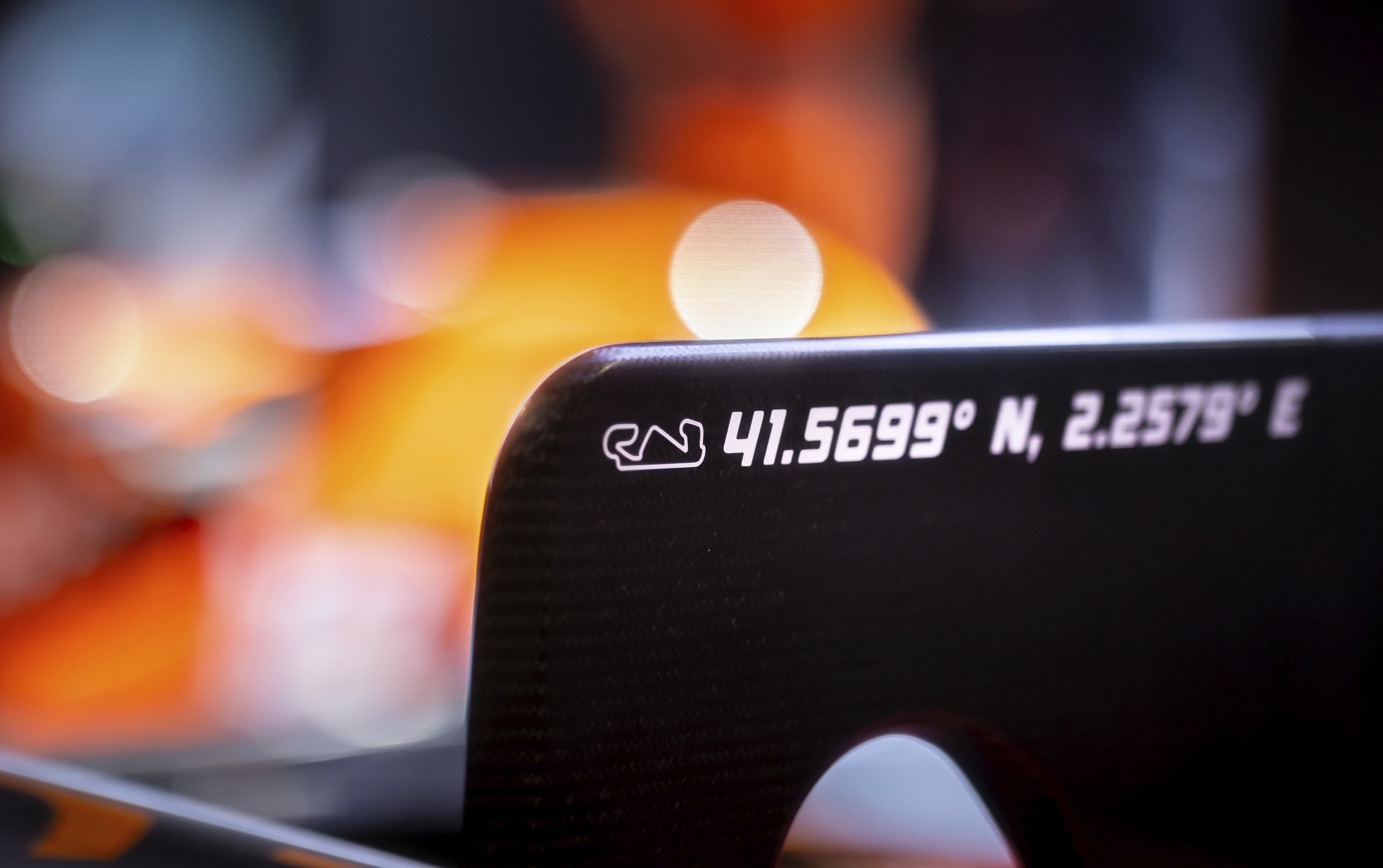
The venue for Round 7, Circuit de Barcelona-Catalunya, is one of Spain’s most important racetracks. Built in Montmeló as part of Spain’s broader sports-infrastructure push ahead of the 1992 Barcelona Olympics, the circuit opened one year before the Games and has since hosted Formula 1’s Spanish Grand Prix, Le Mans Series races, MotoGP, the Michelin Le Mans Cup, and other major international events. This was its first WEC race. Still, the circuit was not completely unfamiliar to endurance-racing fans. Barcelona had hosted the WEC Prologue preseason test during the 2019-2020 season.
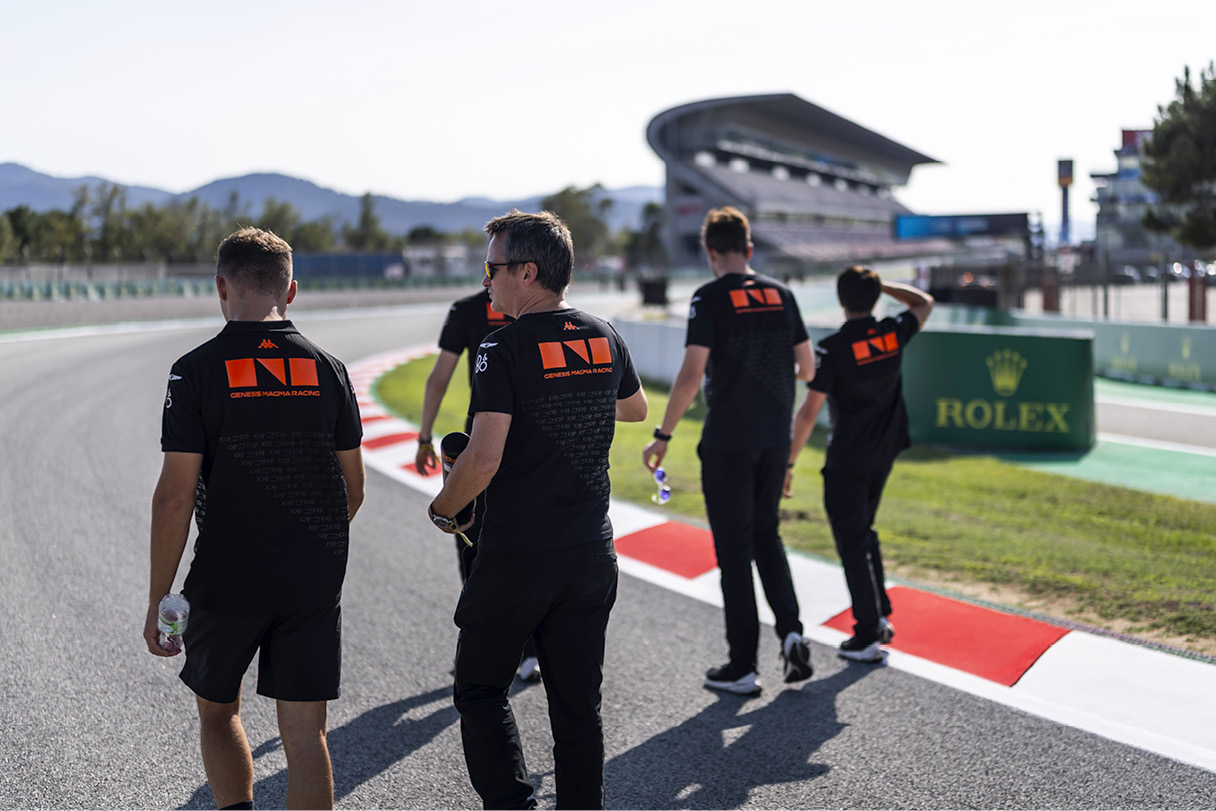
Every team came into Barcelona without previous WEC race data from the track. That gave everyone a clean sheet—and made Barcelona a useful reality check. For Genesis Magma Racing, though, the circuit was not entirely new territory. The team had completed a three-day test there in August alongside BMW and Cadillac. Barcelona had also hosted Genesis’ final winter test before the GMR-001 made its competition debut.
Chief Engineer Justin Taylor explained why that experience mattered:
“We've had two opportunities to test at Barcelona: in December 2025 and most recently August of this year. While the conditions between those sessions were quite different from what we will have for the race, both gave us information we can draw on. That said, testing and racing are different things and we're cautious about reading too much into findings from testing. Tire wear will be a defining factor across the weekend. Barcelona is very demanding on the left sides due to the high-speed right handers. Managing tire saving versus pace to get the best average times over a full stint is a challenge we're still working to understand. We've made genuine progress, which we want to build on in Barcelona, but we remain realistic that there's still a lot of work to do, and this circuit, along with our competition, will tell us clearly where we stand.”
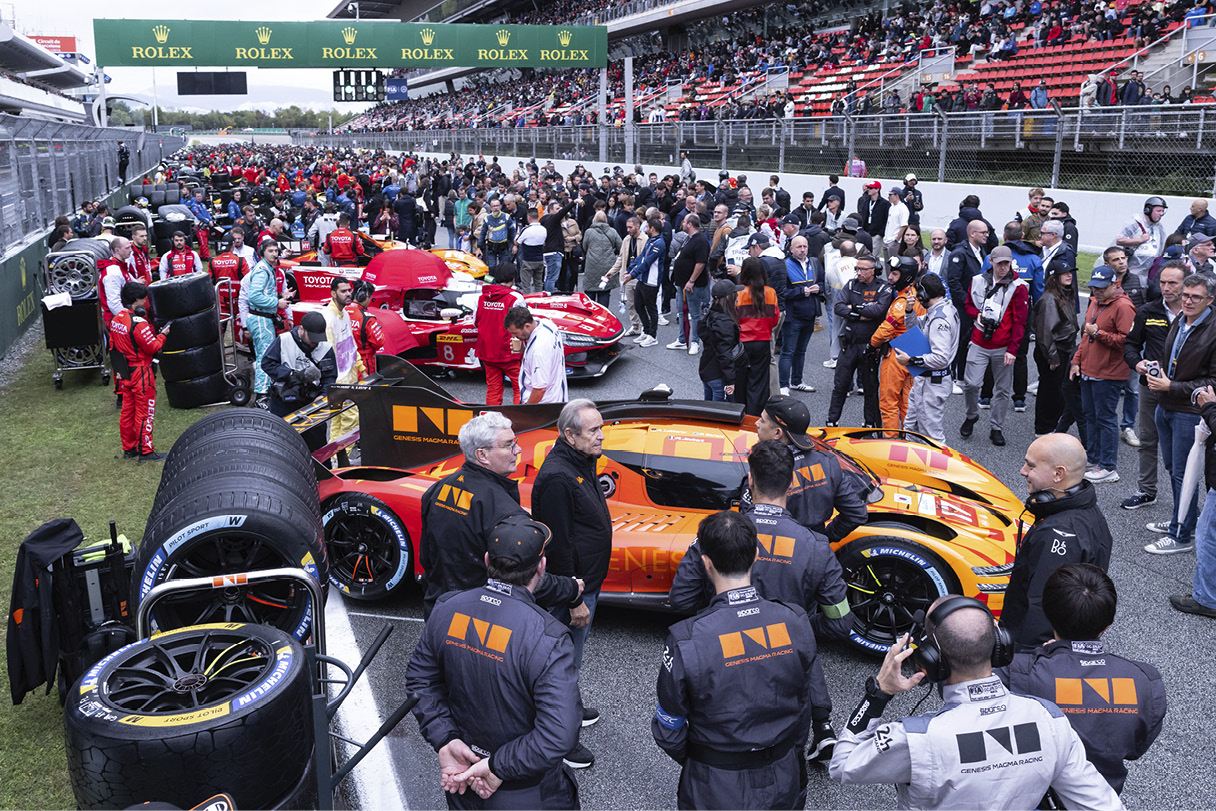
Several rival teams arrived with changes of their own. Alpine, which was set to leave WEC after this season, was not the only team running just two drivers per car. Aston Martin also entered two-driver lineups for Barcelona. Peugeot, coming off a stronger result at Fuji, made a driver change. With Stoffel Vandoorne returning to Formula E, British driver Alex Quinn stepped into his seat. At Cadillac Hertz Team JOTA, Alex Lynn returned to the lineup. The team had previously rotated drivers such as Louis Delétraz and Ricky Taylor into selected rounds while running only two drivers per car at some less demanding events.
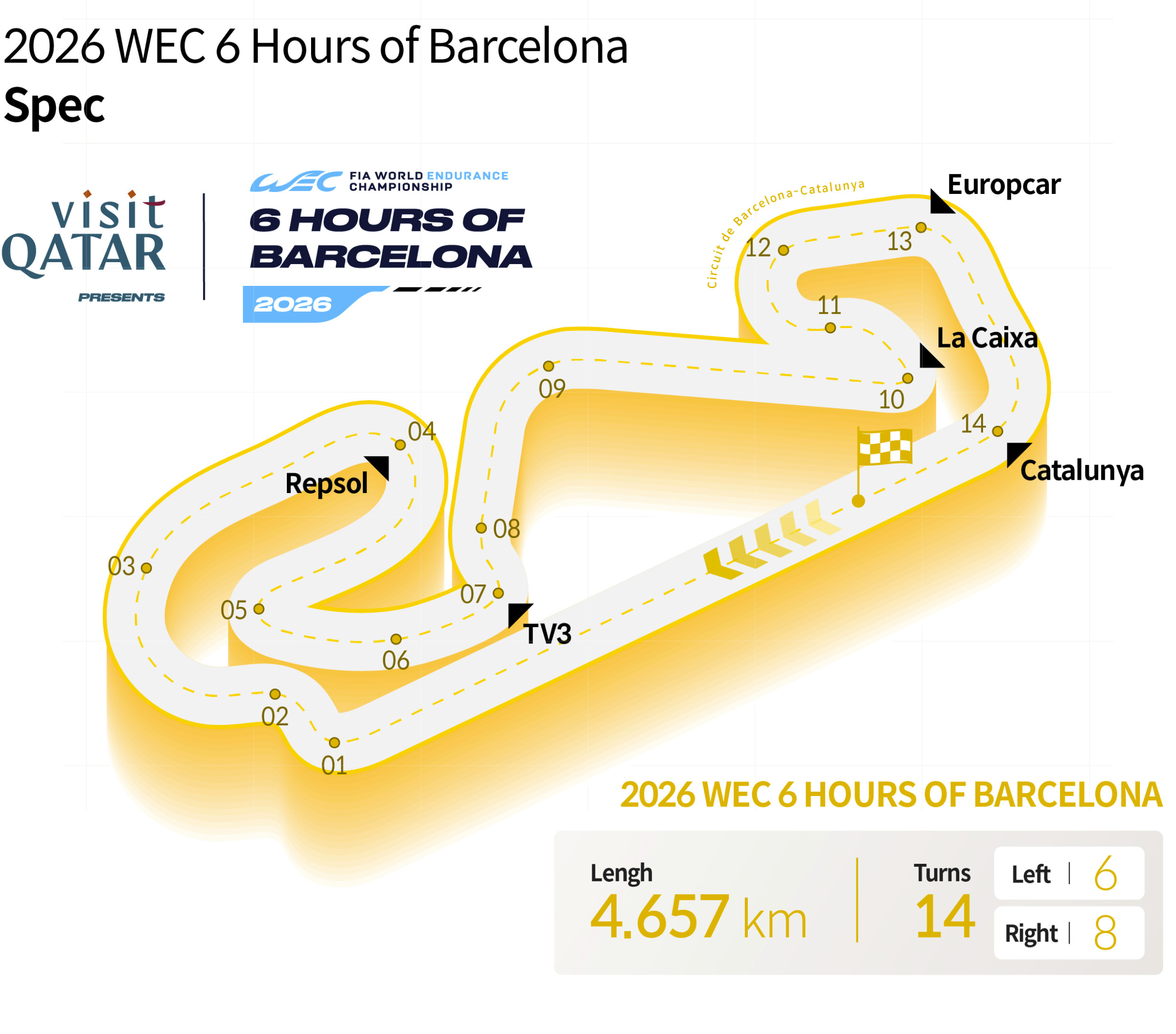
The Circuit de Barcelona-Catalunya measures 4.657 km and packs 14 corners into a lap. It asks a lot of everything. There is a long straight, several high-speed corners, and slower technical sections that test both mechanical grip and aero balance. More than anything, Barcelona is about rhythm. Lose the flow through one corner and the mistake can follow you through the next several turns, costing a chunk of lap time. The weather added another complication. Rain was forecast for both Saturday and Sunday, putting extra emphasis on tire warmup and finding grip quickly. That mattered even more because the Hypercar wet tire brought to Barcelona used a new compound with a much higher percentage of recycled material. Performance had been improved, but the teams had not tested it. Nobody knew exactly what the new wet tire would do once the track turned ugly.
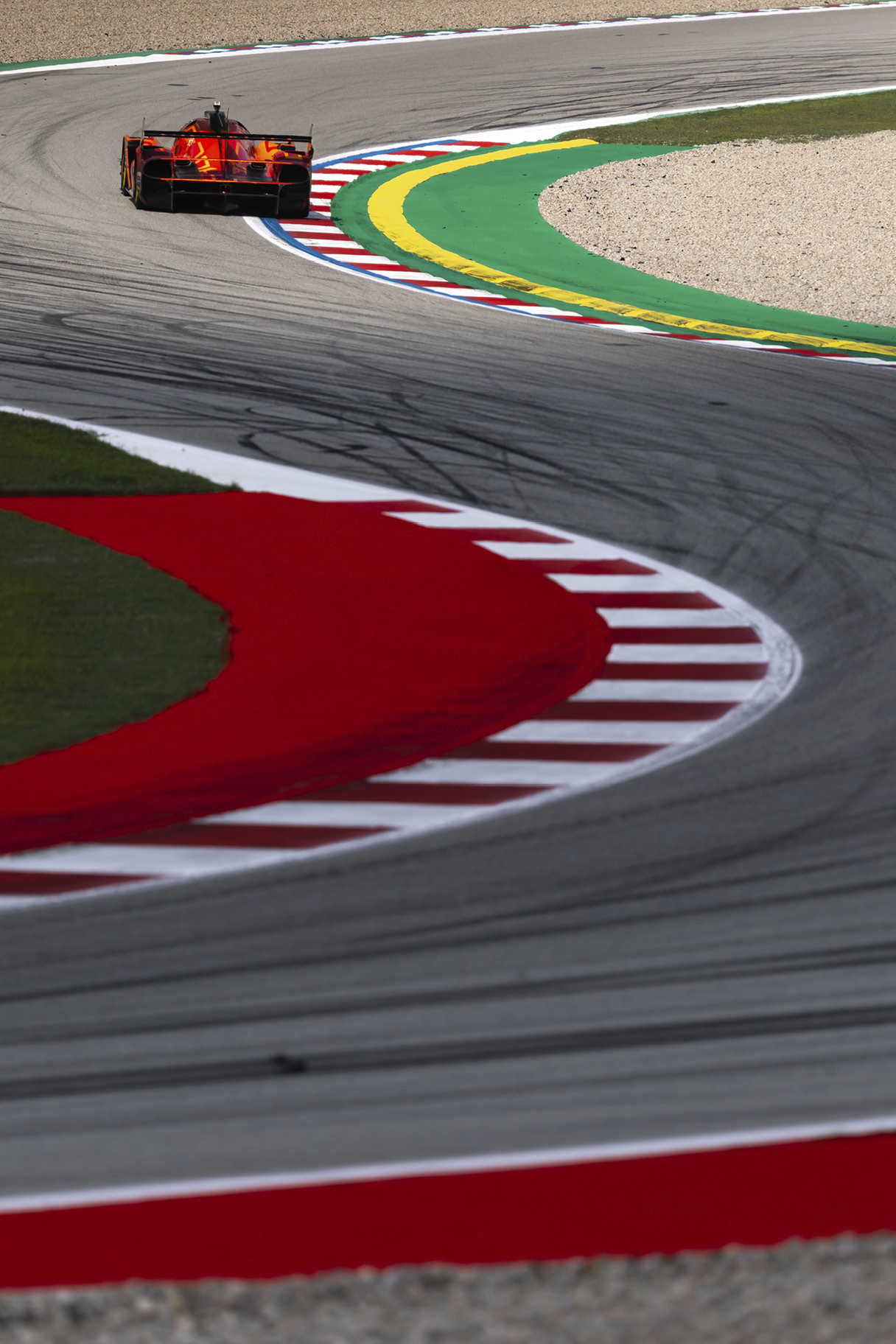
The circuit’s longest straight measures just over 1 km, making it the most obvious passing opportunity on the lap. Turn 3 is a long, fast right-hander that puts heavy load into the left-front tire. Turn 5 drops downhill, making the car more sensitive to weight transfer and balance. Then comes Turn 9. The circuit climbs into the corner, limiting visibility and making the line difficult to judge. That matters because Turn 9 feeds directly onto the second-longest straight, so any lost speed at corner exit carries a price.
After heavy braking into Turn 10, La Caixa, Sector 3 starts working the tires even harder. The corners arrive quickly, and once the balance starts to go away, the whole section can unravel. The slow chicane before the final corner was removed in 2023, making it easier to carry speed onto the main straight and creating more opportunity to attack into Turn 1. But Barcelona is still not an easy place to pass.
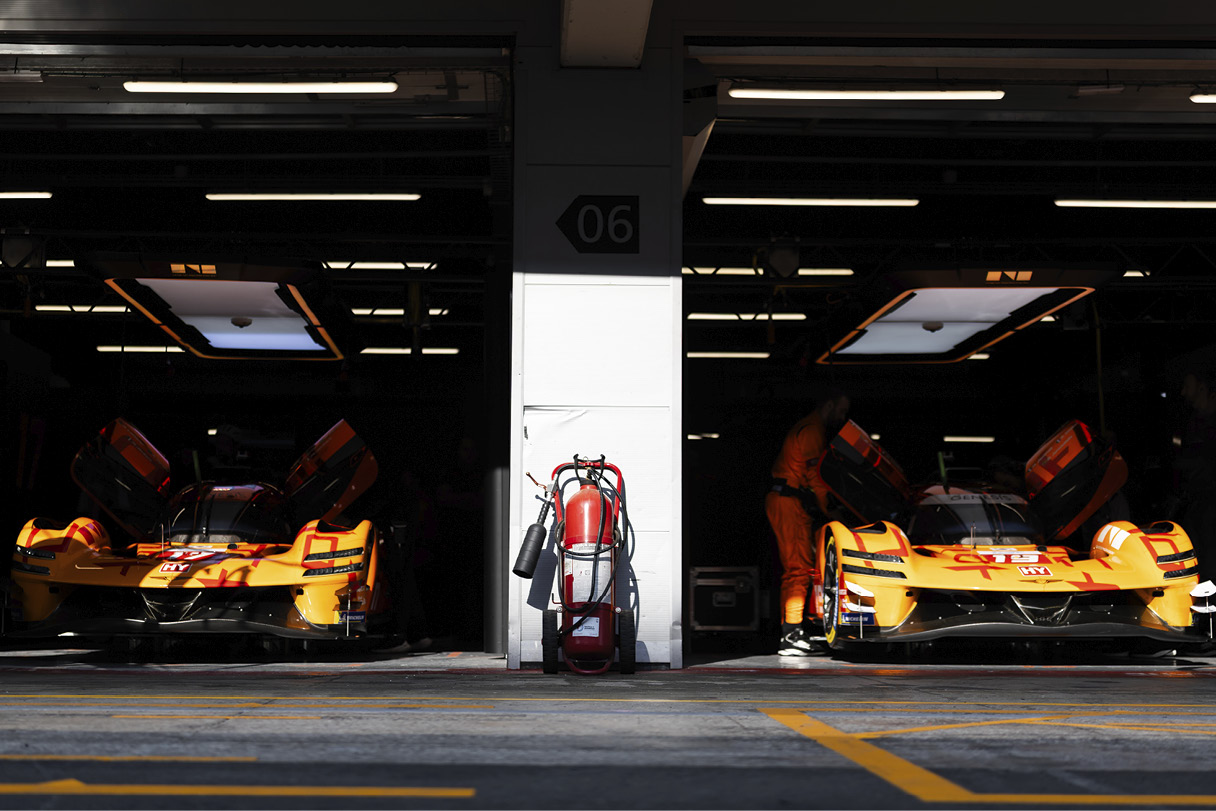
FP1 started at 11:30 a.m. on Friday, October 16, under warm, sunny skies. Robert Kubica went fastest in the #83 AF Corse Ferrari with a 1:31.891. Aston Martin and Ferrari filled much of the front end of the timing screens, with Toyota and Cadillac close behind. Genesis Magma Racing finished FP1 with the #19 in 10th and the #17 in 12th. In LMGT3, the two Vista AF Corse Ferraris, #21 and #54, were quickest.
Conditions stayed similar for FP2 that afternoon. This time Aston Martin went fastest, beating Kubica’s morning benchmark by 0.17 second. Then Genesis showed its hand. Mathys Jaubert put the #17 GMR-001 second overall, just 0.038 second off the top time. The #83 AF Corse Ferrari and #12 Cadillac followed. The top four cars were separated by only 0.092 second. That is nothing. Toyota, still fighting for the championship, sat 5th and 8th. BMW was 9th and 14th.
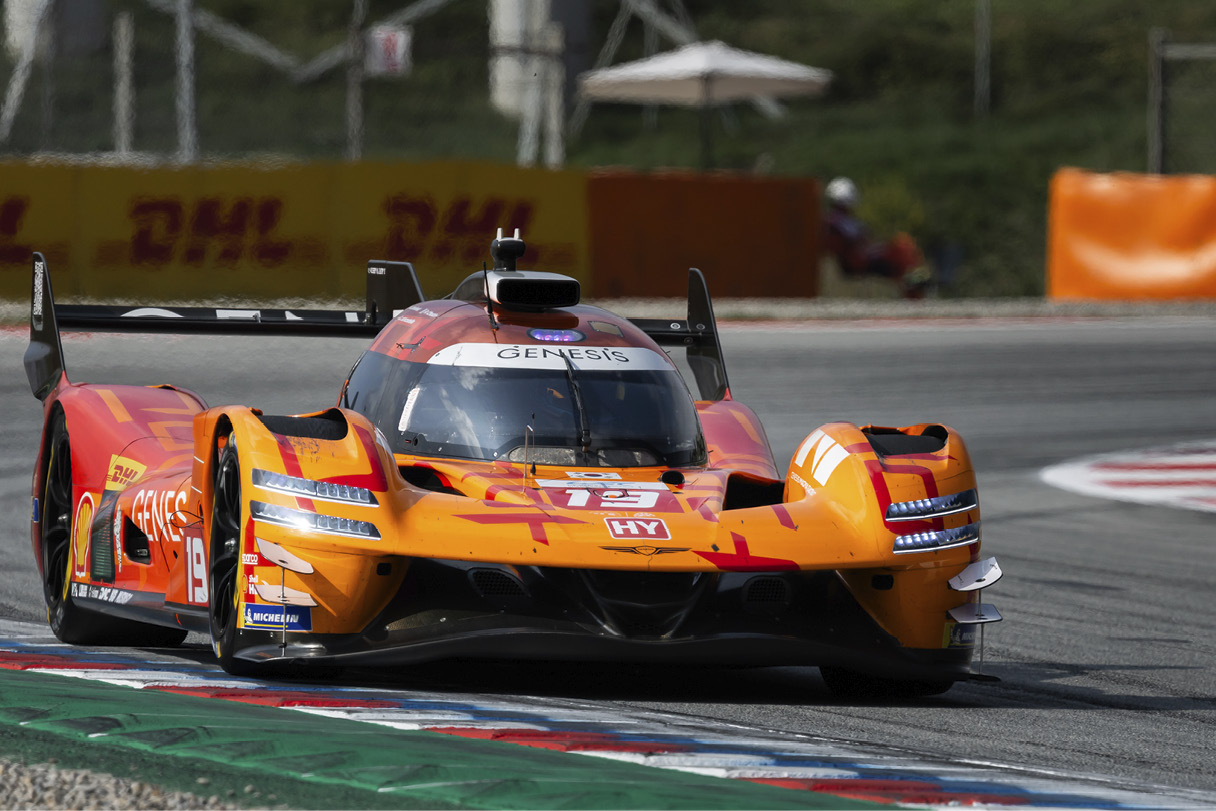
Saturday afternoon’s FP3 gave the Hypercars the track to themselves. The #50 Ferrari set the fastest time, but Genesis was right there again. Mathieu Jaminet put the #19 GMR-001 second, just 0.015 second off the Ferrari. Cadillac and Aston Martin followed in third and fourth. A brief yellow came out when Paul di Resta ran the Peugeot 9X8 off track, but the session continued without a major incident.
Qualifying was delayed by roughly 15 minutes for track repairs. Despite the earlier weather concerns, conditions were clear. In the opening qualifying session, Jaminet put the #19 Genesis at the top with a 1:30.479. The #8 Toyota was second. Jaubert put the #17 Genesis third. Several big names did not make Hyperpole at all. BMW missed out. So did both Aston Martins, both Peugeots, and even the defending champion #51 Ferrari.
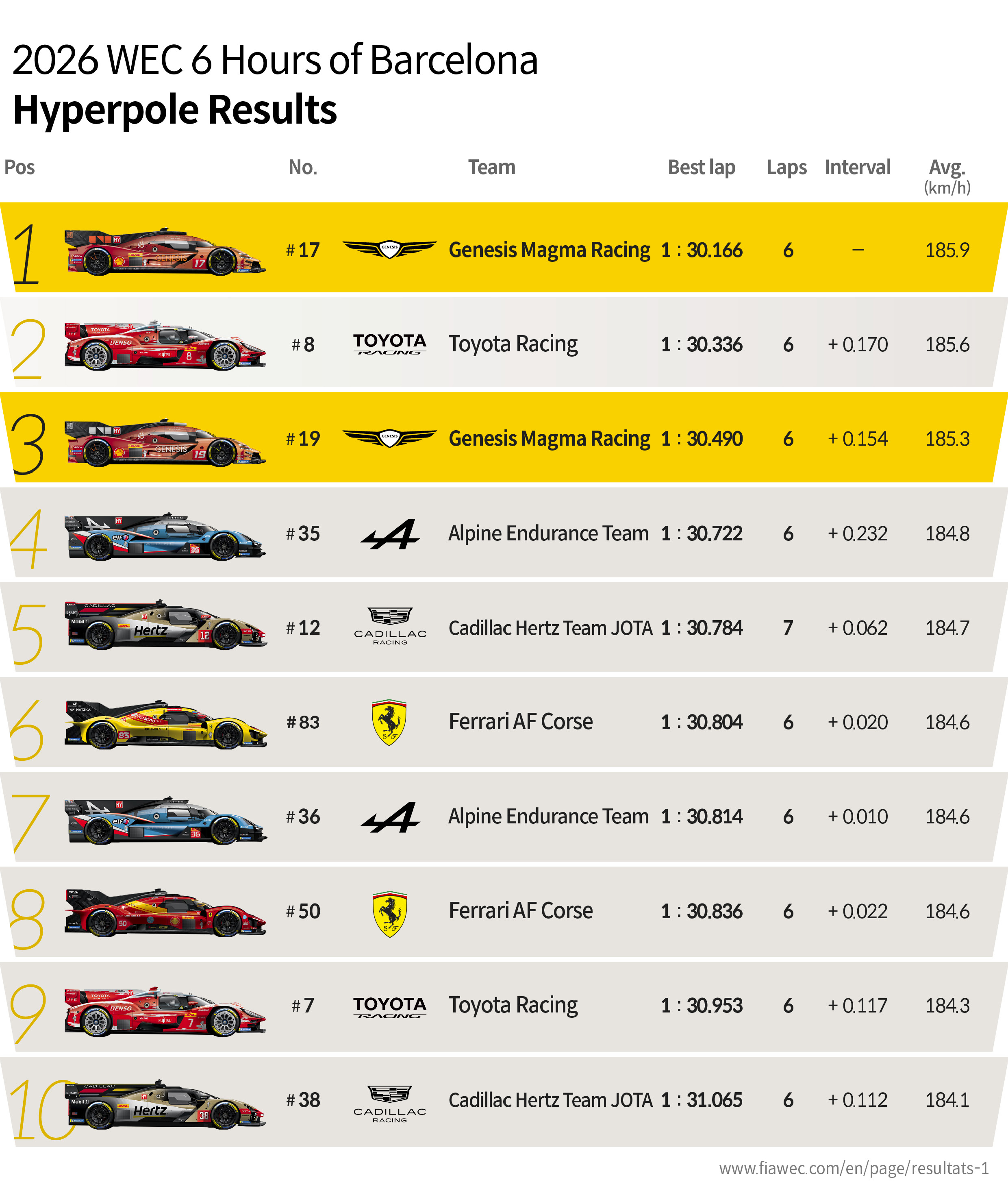
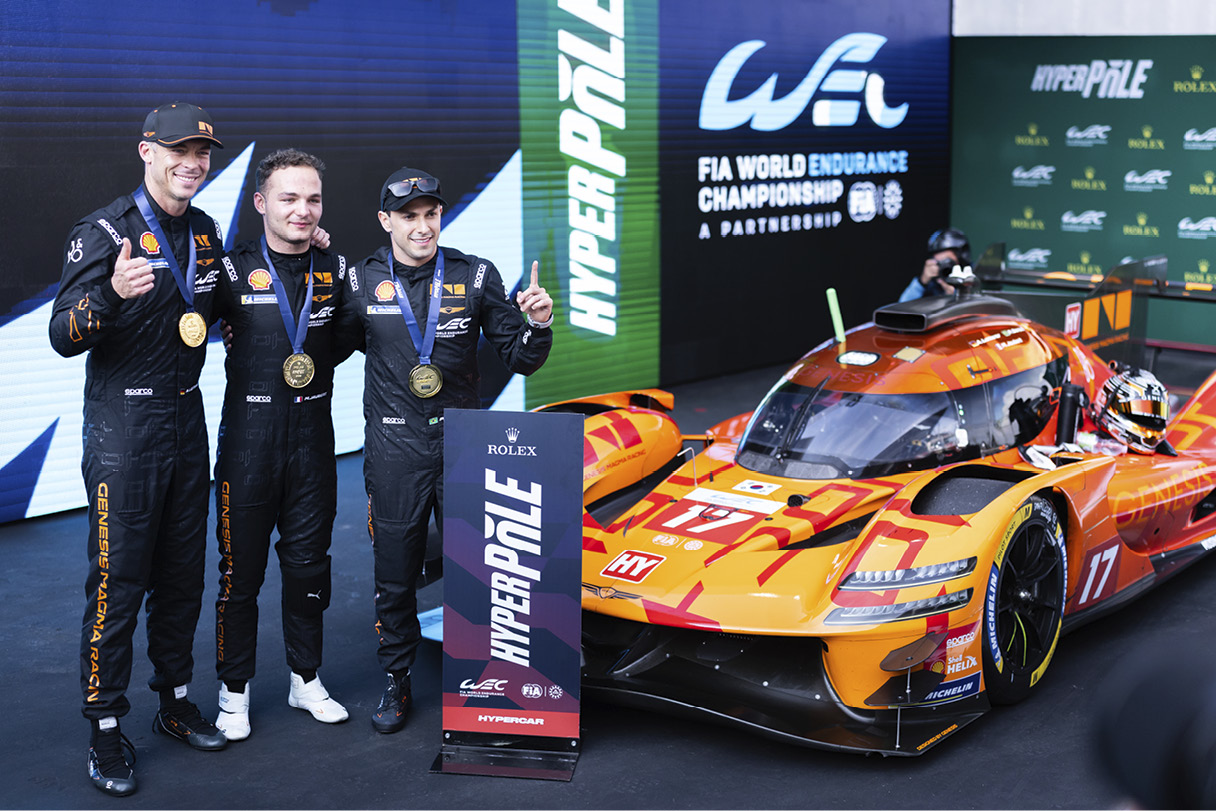
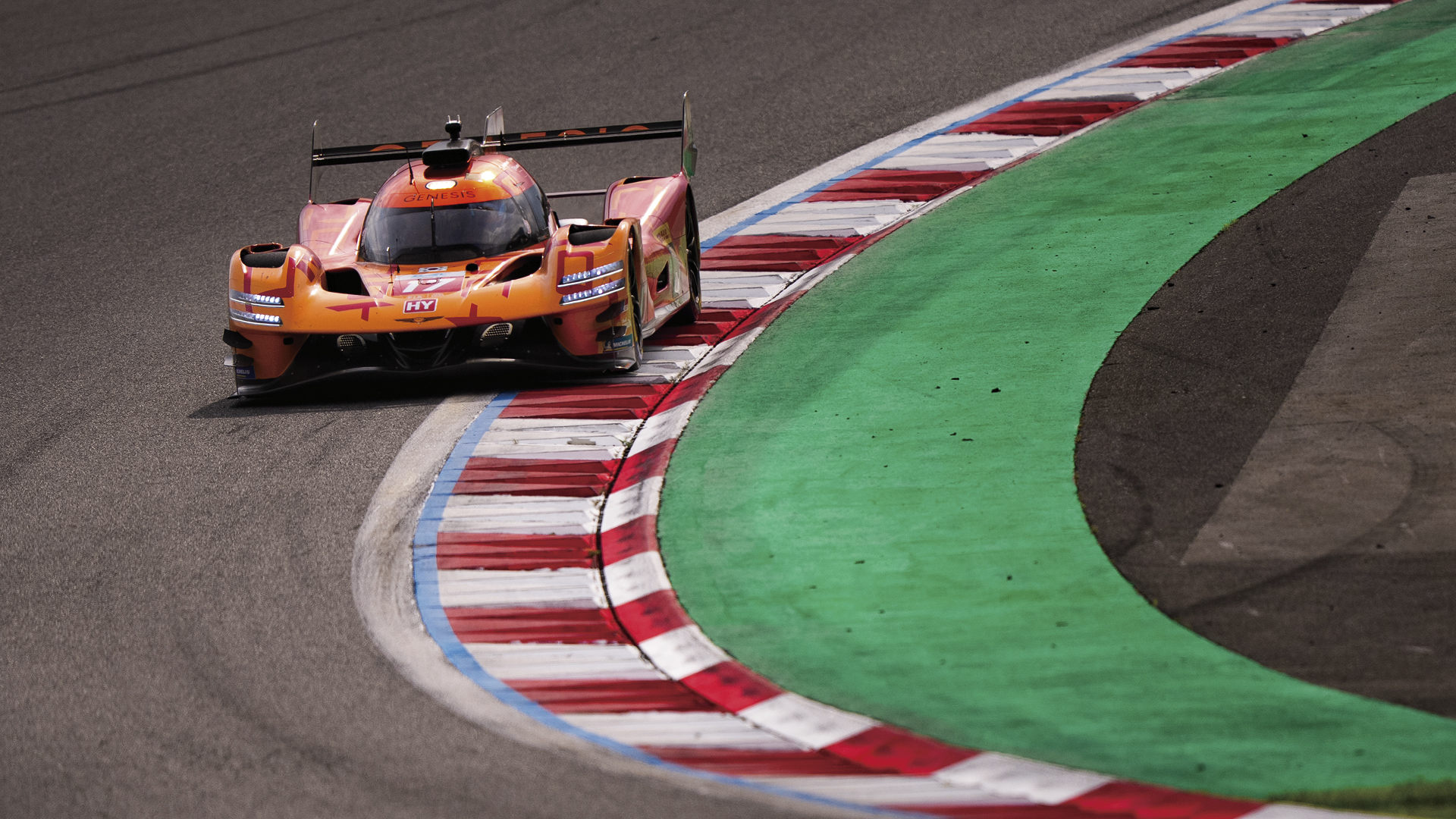
Then came Hyperpole, 15 minutes later. Genesis and Toyota traded fastest laps in what quickly turned into a last-minute showdown. The order kept changing right to the end. Then Jaubert delivered. The #17 Genesis Magma Racing GMR-001 took pole. For a team in its first WEC season, it was a remarkable result. Since the Hypercar class was introduced, very few new manufacturers have managed to take pole in their debut season. Ferrari’s 2023 campaign was one of the rare exceptions. Genesis did it in just its seventh race. That was the real headline. Genesis was no longer just closing the gap. It was taking pole from established Hypercar teams.
Jaubert’s result was even more striking because he was still a Silver-rated driver. Most Hypercar seats are filled by proven Gold- and Platinum-rated drivers. Genesis had taken a gamble on a younger, less experienced driver. At Barcelona, that gamble paid off. Jaubert, the youngest driver in the Hypercar field, became the youngest pole winner in WEC history. Set to move up to Gold status for the 2027 season, he had just given Genesis its clearest proof yet that both the driver and the program had real pace. Jaminet added to the team’s qualifying result in the #19. Despite the car stopping twice during the session, he still secured third on the grid, behind the #8 Toyota. After taking pole, Jaubert summed it up this way:
“It’s an incredible feeling!”, Jaubert said following the Hyperpole.
“The team did a fantastic job to get both myself and Mathieu inside the top three, and the car was just amazing. The conditions were less than favorable compared to the free practice due to the low level of grip. However, the team took note of the variables and was able to send both cars out with the appropriate tires and strategy.”
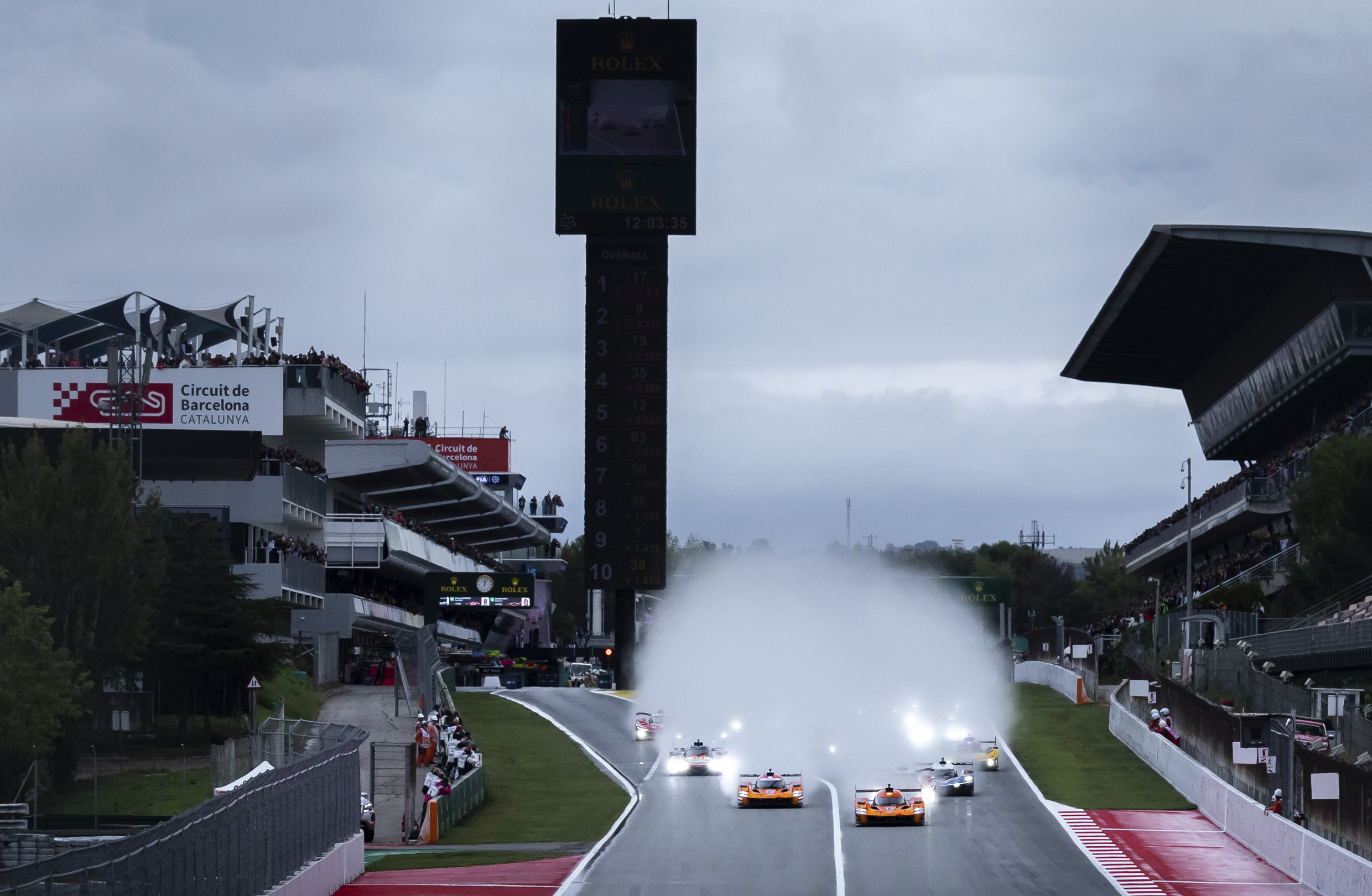
The race started at noon on Sunday, October 18, with rain still falling. Genesis briefly ran 1-2 right after the start when Daniel Juncadella got past André Lotterer and moved into the lead. It did not last. Lotterer’s #17 slipped back to third, while Juncadella locked up under braking and went off into the gravel at Turn 5, dropping all the way to 16th. The opening laps quickly turned into a mess. Alpine and Cadillac made contact, several LMGT3 cars tangled, and the race went under a Virtual Safety Car almost immediately.
The #8 Toyota came out of the chaos in front. The #83 Ferrari moved into second, Lotterer ran third, and the #50 Ferrari sat fourth. Cleanup dragged on long enough for the full Safety Car to come out, and racing did not resume until 25 minutes after the start. Then the leaders hit GT traffic. Race control also handed Sébastien Buemi a five-second penalty for a start-procedure violation, while Will Stevens in the #12 Cadillac received a 10-second penalty.
About 30 minutes in, Harry Tincknell crashed the #007 Aston Martin into the barrier at Turn 5. Another VSC followed. The #8 Toyota still led, and while most of the field pitted, René Rast stayed out in the #20 BMW and jumped all the way to second. The #50 Ferrari and #7 Toyota followed. Lotterer’s #17 Genesis sat eighth. Juncadella’s #19 was still buried in 16th.
The race restarted again before the one-hour mark. Then the #20 BMW headed to the pits with a technical problem, handing Toyota a 1-2 at the front. Genesis was trying to claw its way back. Juncadella had climbed to 11th in the #19. Lotterer had slipped to 13th. Then came another mistake. Just after the one-hour mark, Lotterer spun and ended up in the gravel, dropping the #17 to 14th.
At around 1 hour 40 minutes, the track had dried enough that the wet tires were starting to overheat and wear badly. Now the race became a tire-call guessing game. Wet tires fall apart quickly on a drying surface, so some drivers deliberately hunted for damp patches just to keep the rubber alive. The #36 Alpine and #51 Ferrari were among the first to make the switch. Then everyone started showing their hand. Some went all-soft. Some stayed on full wets. Others tried asymmetric setups, including mediums on the left and softs on the right. Genesis split its strategy, too; The #19 went to slicks, but the #17 stayed on wets.
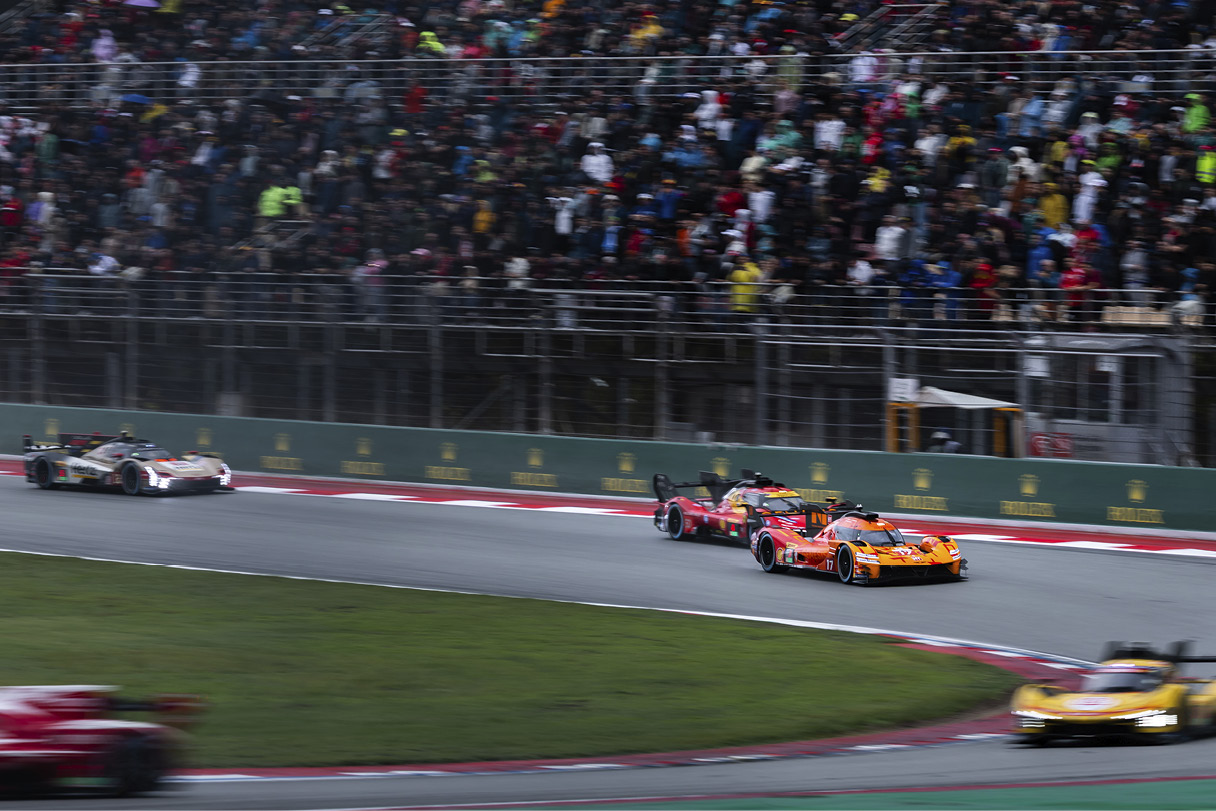
By 2 hours 45 minutes, most of the remaining cars had finally abandoned the wet tires. Genesis changed drivers in the #17, with Mathys Jaubert taking over from Lotterer. The #19 stopped slightly later, putting Paul-Loup Chatin in the car. The track was still cold, and several cars struggled to get their tires up to temperature. A few ran wide or off track entirely. The #19 used mediums on the left and softs on the right. At 3 hours 24 minutes, the #17 returned to the pits for repairs, dropping even farther behind the leaders.
Around 3 hours 35 minutes, repeated off-track incidents brought out another VSC. The weather was still overcast, and standing water around the curbs had not dried, making the circuit brutally slippery. Teams immediately piled into the pits again. The #007 Aston Martin had an even bigger problem. Its engine stopped while the car was moving slowly and would not restart. The car retired. The VSC also wiped out Toyota’s huge advantage. The two Toyotas had been more than a minute clear of third place. Suddenly, that gap was down to about five seconds.
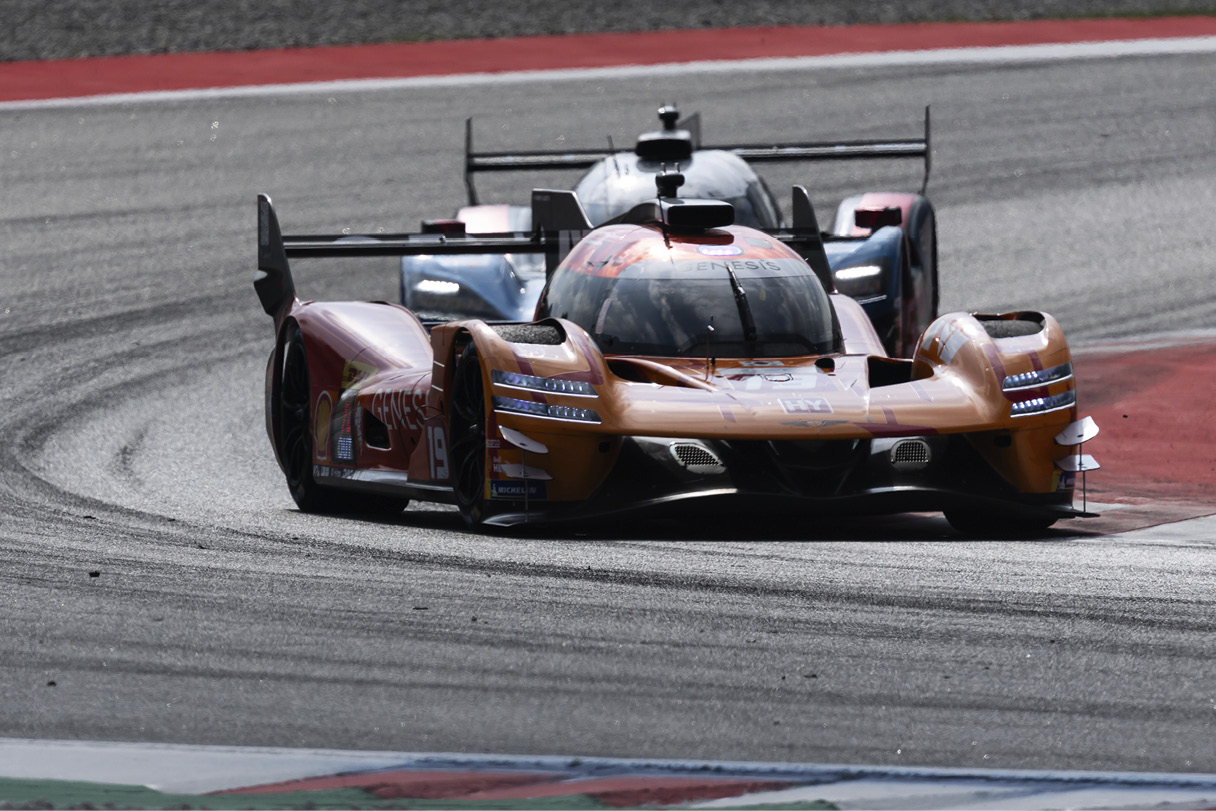
With two hours remaining, the race went green again. The #8 Toyota led, with the #7 Toyota right behind. The #50 Ferrari and #83 AF Corse Ferrari were next. Chatin had the #19 Genesis up to ninth. Jaubert’s #17 remained 16th. In LMGT3, the #92 Manthey Porsche led the class.
Toyota never let go. The #8 won the race, with the #7 coming home second for a dominant Toyota 1-2. The #50 Ferrari finished third, nearly 40 seconds behind. That victory gave Toyota its fourth win of the season and sealed the 2026 manufacturers’ championship. It was the organization’s eighth manufacturers’ title overall—and its first under the Toyota Racing name. For Buemi, the timing made it even sweeter. He won on his 100th WEC start. BMW’s day went the other way. The team had briefly climbed to second, but a tire-pressure infringement brought a penalty. That left BMW scoreless for the third straight race and effectively knocked it out of the drivers’ title fight.
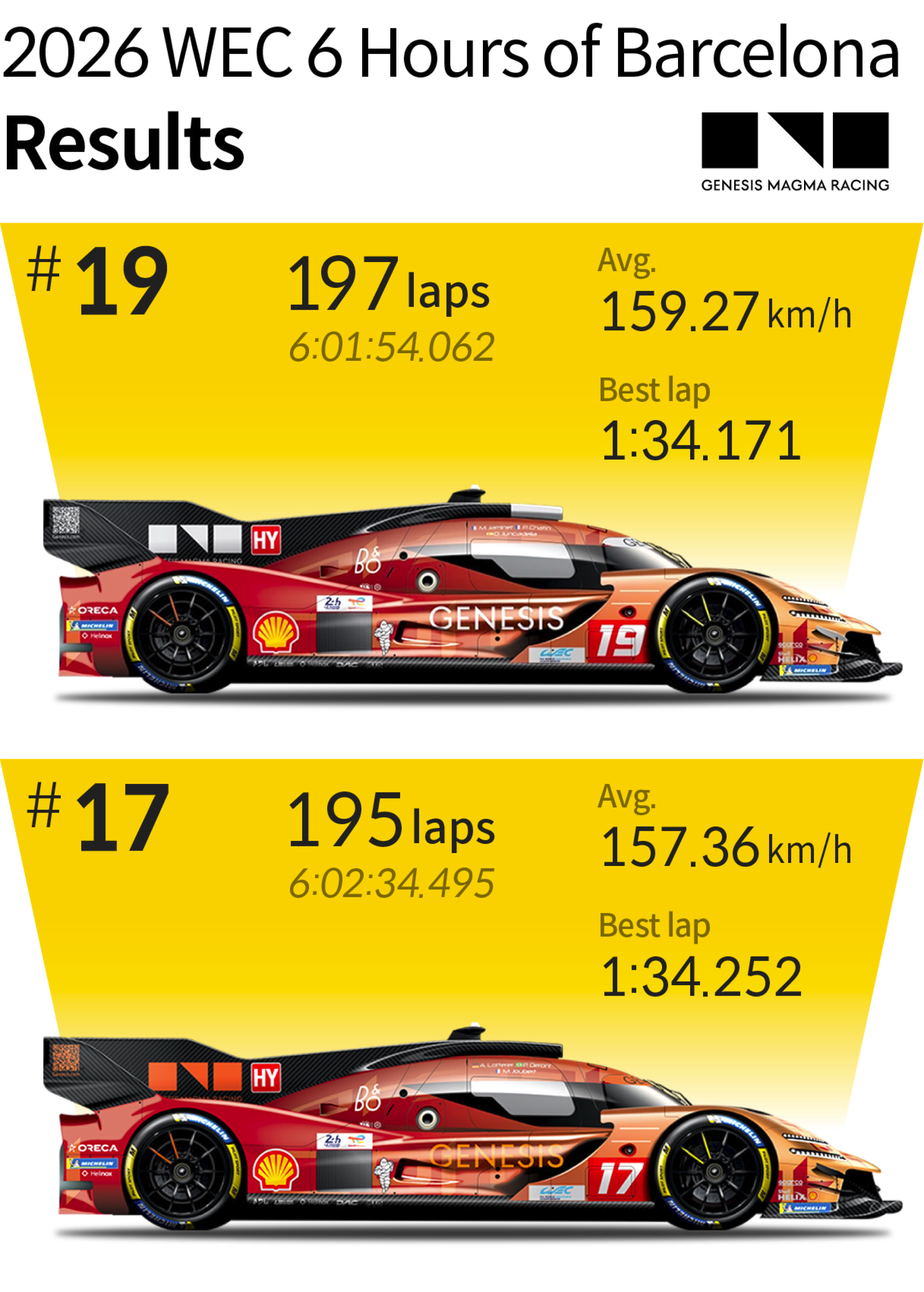
Genesis Magma Racing had arrived at Barcelona with huge expectations after taking its first-ever pole. The race did not live up to them. Repeated early trips off track knocked both cars out of the lead fight, and the team eventually finished 11th with the #19 and 16th with the #17. The speed was there. The execution was not. Wet-weather performance was still the weak spot, especially when grip changed quickly and the race got messy.
In LMGT3, the #92 Manthey Porsche beat the #10 Garage 59 McLaren to take the class win. It was Porsche’s first WEC victory since the 2025 24 Hours of Le Mans.
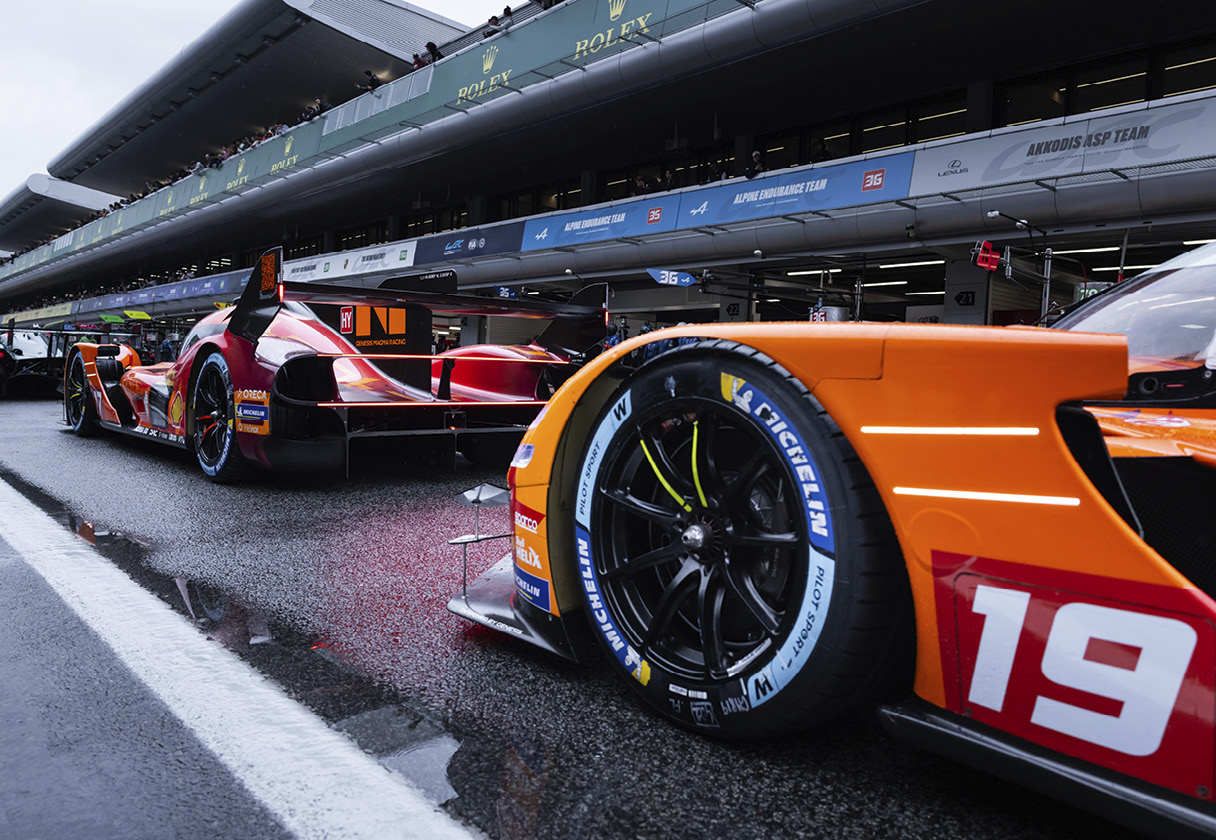
Genesis Magma Racing also used the Barcelona weekend to confirm part of its 2027 driver lineup. Daniel Juncadella became the first driver officially named for next season. Juncadella joined the team in September 2025 and has played a key role in developing the GMR-001 from the early stages of the program.
The WEC season now heads to its finale at Monza on November 8. Best known as the home of Formula 1’s Italian Grand Prix, Monza is famous for its simple layout, massive average speeds, and nickname: the Temple of Speed. Genesis Magma Racing has already packed plenty into its first season. It finished its debut race at Imola. It scored its first points at Spa. It brought both cars home at the 24 Hours of Le Mans. And at Barcelona, it took its first pole. For a first-year team, that is serious progress. Now there is only one race left. Monza is the last chance to turn that pace into one final result.
Written by: Soo-jin Lee
In 1991, Lee’s passion for cars led him to enthusiastically write letters to the newly launched Korean car magazine Car Vision. This unexpected connection launched his career as an automotive journalist. He has served as editor and editorial board member for Car Vision and Car Life, and now works as an automotive critic. While eagerly covering the latest trends like electric vehicles, connected cars, and autonomous driving technology, he is also a car enthusiast who secretly hopes that the smell of gasoline engines will never disappear.